There is an image of evangelism that has come so deeply into the purview of the Western congregation for a generation. It is something that comprises stage, with microphone, crowd and amazing speaker who speaks to the audience who moves them to listen. It is a powerful image. And it has produced real fruit.
But it has also wrought a quiet and destructive side effect — the belief that leading someone to Christ is essentially the work of people who have platforms. That the Gospel moves through pulpits and podcasts and big events — and that the average believer, the one without a platform or name or a following, best fits the role of sitting in the audience and providing that support by standing next to the people that have what you and I offer.
This belief is not only wrong. It is wasting a vast amount of influence from the church, which it does not even know it’s losing.
The most important spiritual dialogues in history did not take place on stages. They appeared at wells, at dinner tables, on dusty roads, in the midst of ordinary people’s ordinary days around one another. They happened through the presence of someone who witnessed, took note and was likely to say something true.
That is still how it works. And it is available to all believers.
Why Daily Leaders Are the Greatest Evangelistic Asset of the Church
The person with the microphone can get to hundreds or thousands in one instant. The person without one is to the individual — in contact and over time, with the sort of relational depth that a broadcast can’t create.
The research on how people come to faith reliably reveals the same pattern: Most Christians adopt the faith in the influence of someone they knew personally. Not a stranger. Not a celebrity pastor. Not a viral sermon. A friend, a colleague, a neighbor, a family member — someone whose life prompted questions the Gospel sought to answer.
This is the power of the lay person in the labor of evangelism that is irreplaceable. Not their platform. Their proximity. They’re already in the spaces where the Gospel needs to go — the office, the neighborhood, the classroom, the gym, the social circle. They have already earned the relational credibility that opens the door to spiritual conversation. They are already trusted.
What they are not usually lacking is access or connection. It is the belief that what they carry matters, and the skills to take it with them effectively.
The Lie That Puts Lay People on the Sidelines
The lie is simple and effective: you are unfit. You have no formal university training. You simply don’t have the right personality. You are not eloquent enough, knowledgeable enough, bold enough. Leave that to the pros. Pray, give and come on Sunday, but, more importantly, let people with the gifts do the work of the Gospel.
This lie has silenced generations of gifted, well-placed, deeply caring believers in the very places where they had most potential impact. It has crowded pews with spiritually active and evangelistically inactive souls — sure that they have nothing to offer and no right to try.
But the New Testament tells not a story about movement taken on by experts. It is about a movement carried on by ordinary men and women — most without credentials, all of them marked by an encounter with truth that they could not stop talking about. And the qualification was not a degree, not a gift set. It was a story. And every believer has one.
The point is not whether you are qualified to lead someone to Christ. The issue is whether you think that the ordinary life you live, led with the utmost virtue and above all genuine love, is a good enough space to count. It is. It always has been.
How Beyond Success Tables Give Everyday Leaders a Practical Jump Start
If one knows something is worthwhile to offer, one knows how, the other doesn’t. The difference between conviction and action is often a practical one — not a lack of desire but lack of structure. This is where Beyond Success Tables take the lead for us.
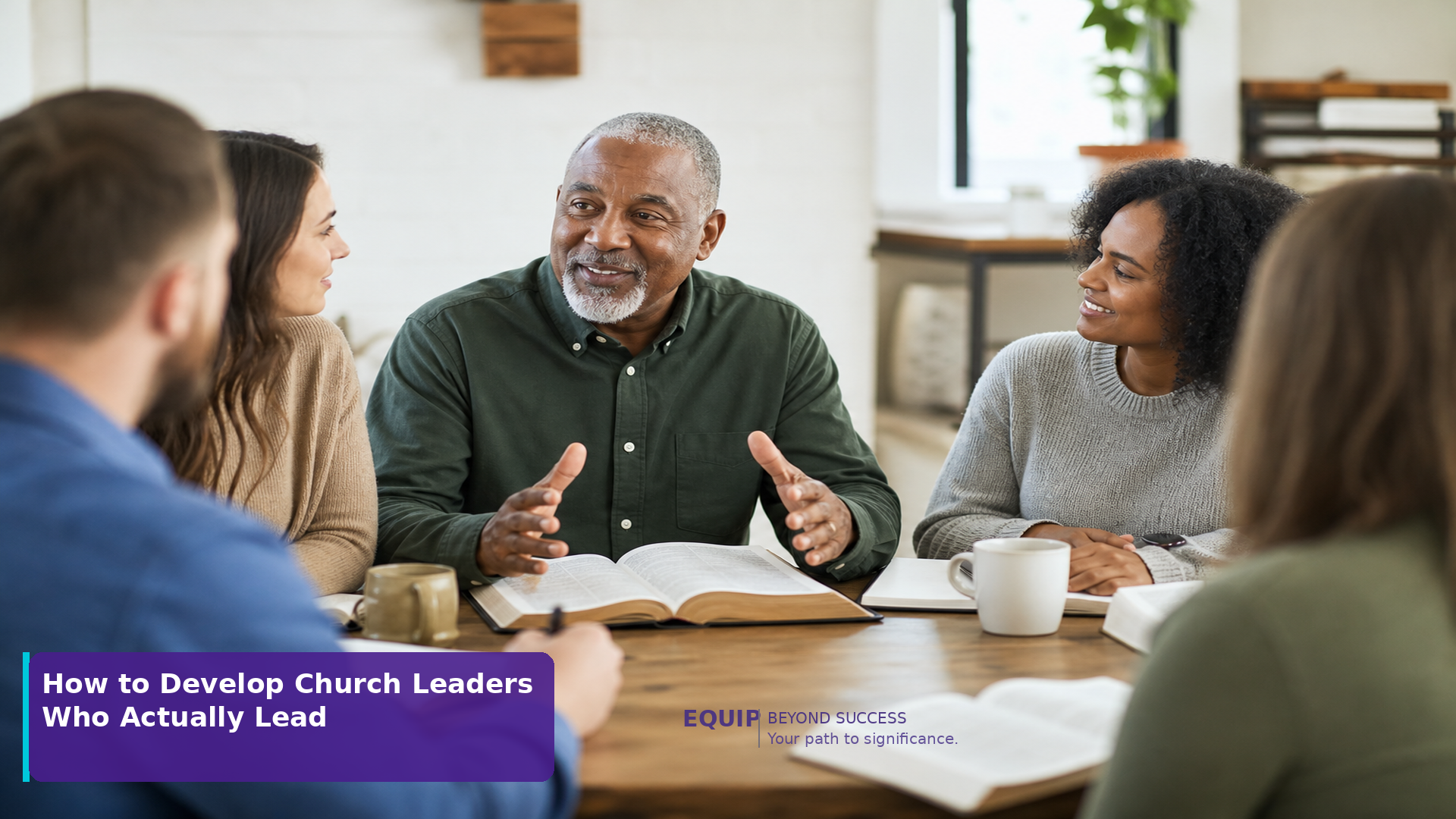
Produced by EQUIP from decades of leadership development on a global scale, Beyond Success Tables offer a simple, proven way to convene people around conversations that genuinely matter. The emphasis is on leadership and character — themes that are universally significant and therefore natural to secular spaces. And within those conversations, the more profound questions naturally come up. Questions about purpose. About what drives a person. About what base they are creating their life on.
These are not manufactured moments. They are the everyday result of people actually sitting together and grappling frankly with the questions such character-focused leadership always raises. The Gospel may not have to be forced on these conversations. It presents itself as the most logical answer to the questions already on the table.
Beyond Success Tables do not need a large group, a formal venue, or considerable resources. They take a willing person, and a dedication to showing up regularly. A small group of colleagues on a lunch break. A few neighbors gathering once a month. A mentoring relationship with structure and intentionality. The format is flexible. The impact is real.
Every believer who has ever sat across from someone and watched the Gospel land — watched a question turn into a conviction, watched a conversation become a turning point — will tell you that no microphone was required. What was needed was presence. Consistency. The willingness to engage.
You already have what it takes. The table is already set. All that’s left is to sit down and have a discussion.